You Won't Believe What Aarhus Hides in Plain Sight
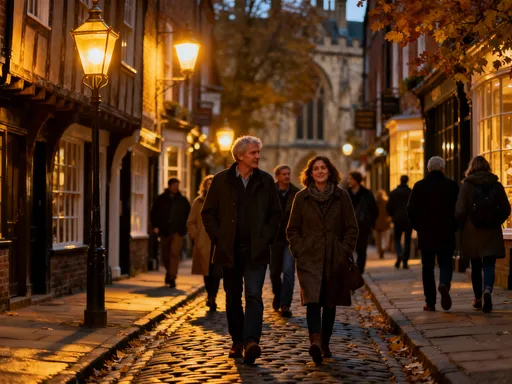
Aarhus, Denmark, is more than just a university town or a coastal getaway—it’s a living gallery of architectural evolution. I didn’t expect to be so captivated by brickwork, light, and urban design until I wandered its streets. From ancient timber frames to bold modern statements, every corner tells a story. This city blends old and new so seamlessly, you almost don’t notice how powerful the contrast really is—until it hits you. There’s no grand announcement, no towering landmark that dominates the skyline. Instead, Aarhus reveals itself gradually, like a well-kept secret whispered through centuries of craftsmanship, resilience, and quiet innovation. It’s a city where history isn’t preserved behind glass but lives in the rhythm of daily life, where modernity doesn’t erase the past but dialogues with it. And once you begin to look closely, you realize: architecture here isn’t just about buildings. It’s about belonging.
First Impressions: Stepping Into Aarhus – Where Time Stands Still and Moves Forward
Arriving in Aarhus by train, the city greets visitors not with a dramatic skyline but with a sense of calm coherence. The station, a sleek glass and steel structure completed in 2018, stands as a gateway that feels both modern and unobtrusive. From here, the city unfolds in layers—low-rise buildings, wide pedestrian avenues, and a skyline punctuated not by skyscrapers but by church spires and thoughtful contemporary forms. What strikes most is the absence of architectural chaos. Unlike many European cities where centuries of development have resulted in a jumbled aesthetic, Aarhus feels intentionally composed, as if each new structure was placed with care and respect for what came before.
The city’s compactness enhances this sense of harmony. Most of central Aarhus is easily walkable, encouraging exploration on foot and allowing visitors to experience the subtle transitions between neighborhoods. The streets are lined with Danish brickwork—soft reds, warm browns, and muted grays—that give the city a grounded, human-scale feel. Cyclists glide along dedicated lanes, and public plazas invite pause and conversation. There’s a quiet confidence in the urban design, a balance between functionality and beauty that reflects Scandinavian values of practicality and aesthetics coexisting.
What makes Aarhus unique is how it avoids architectural overstatement. There are no forced attempts to impress, no monuments built solely for spectacle. Instead, the city’s character emerges through consistency—consistent materials, consistent scale, and a consistent commitment to livability. As you walk from the station toward the harbor, you begin to notice how old and new exist not side by side but intertwined. A 19th-century warehouse might now house a design studio, its original windows restored, while just across the street, a new apartment complex echoes the same brick pattern in a modern form. This is not preservation for nostalgia’s sake, nor is it innovation for the sake of trend. It is architecture as a continuous conversation—one that invites you to listen closely.
The Heart of History: Exploring Den Gamle By (The Old Town)
Just a short walk from the city center lies Den Gamle By, an open-air museum that transports visitors back to Denmark’s pre-industrial past. Covering over 20 hectares, this meticulously reconstructed district brings together more than 75 historic buildings relocated from across the country and reassembled to reflect urban life between the 16th and 19th centuries. Cobblestone streets wind between half-timbered houses with thatched roofs, blacksmith shops, and old schoolhouses, creating an immersive experience that feels authentic rather than staged. The absence of modern noise—no cars, no advertisements—allows the past to speak clearly, not through narration but through atmosphere.
The architecture here tells stories of craftsmanship and community. The half-timbered construction, with its visible wooden frames filled with wattle and daub or brick, was both practical and expressive. Each house was built to withstand Denmark’s damp climate while reflecting the social status of its inhabitants. The homes of merchants are larger, with ornate carvings and multiple stories, while those of laborers are modest and functional. What stands out is the attention to detail—window placements designed to maximize natural light, steep roofs to shed rain, and interiors arranged around central fireplaces for warmth. These were buildings shaped by necessity, yet they possess a quiet beauty born of proportion and material honesty.
Den Gamle By is not a frozen tableau but a living museum. Costumed interpreters demonstrate traditional crafts—baking rye bread in wood-fired ovens, weaving textiles, or forging iron tools—adding movement and sound to the historical setting. Children play in the courtyards, and families gather in the old town square during seasonal festivals. In winter, the buildings are dusted with snow, their windows glowing with candlelight; in summer, flower boxes burst with color, and the scent of fresh bread drifts from the bakery. The museum doesn’t romanticize the past but presents it with honesty—acknowledging both its charm and its hardships. It’s a place where history is not observed from a distance but felt in the texture of wooden doors, the creak of floorboards, and the play of light through small-paned windows.
What makes Den Gamle By particularly meaningful is its role in preserving regional identity. In an age of globalization, where cities risk losing their distinct character, this museum serves as a reminder of Denmark’s architectural roots. It shows how urban life once revolved around walkable neighborhoods, local trades, and communal spaces—values that Aarhus continues to honor in its modern development. By safeguarding these structures, the city ensures that future generations can understand not just how people lived, but how they built their world with care and intention.
A Modern Masterpiece: ARoS Aarhus Art Museum and Its Rainbow Soul
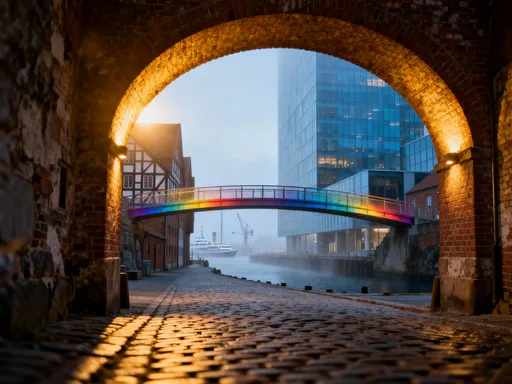
Rising from the heart of Aarhus like a luminous beacon is ARoS Aarhus Art Museum, a cultural landmark that redefined the city’s architectural landscape. Completed in 2004 and expanded in 2011, the museum is a bold statement of contemporary design, yet it integrates seamlessly into the urban fabric. Its most iconic feature—the Your Rainbow Panorama—floats above the city like a ring of colored glass, offering a 360-degree view that transforms how visitors see Aarhus. This circular walkway, conceived by Icelandic-Danish artist Ólafur Elíasson, is more than an art installation; it is architecture as experience, where light, color, and perspective become the medium.
The museum’s design, by Danish firm Schmidt Hammer Lassen, reflects a commitment to clarity and openness. The building is a massive rectangular prism clad in green glass, its surface reflecting the sky and surrounding parkland. Inside, a spiral ramp ascends through nine exhibition floors, echoing the Guggenheim in New York but with a distinctly Nordic sensibility—lighter, more transparent, and deeply connected to nature. The use of natural light is central to the design; skylights and glass walls flood the galleries with diffused daylight, enhancing the viewing experience while minimizing energy use. This integration of sustainability and aesthetics is a hallmark of Scandinavian architecture, where form and function are never at odds.
The Your Rainbow Panorama is the museum’s soul. As visitors step onto the elevated walkway, they are surrounded by bands of colored glass that shift with the time of day and weather. On a clear morning, the reds and oranges glow like fire; on an overcast afternoon, the blues and violets create a meditative calm. The effect is both disorienting and uplifting, a sensory journey that alters perception. From this vantage point, Aarhus unfolds below—not as a collection of buildings, but as a living organism, breathing with light and movement. It’s impossible to stand here without feeling a sense of wonder, not just at the view, but at the power of architecture to inspire emotion.
ARoS is more than a museum; it is a symbol of Aarhus’s cultural ambition. Its presence has drawn international attention, yet it remains deeply rooted in the community. Locals visit regularly, not just for exhibitions but for the experience of being inside a building that celebrates light, art, and human connection. The museum hosts educational programs, public lectures, and family events, reinforcing its role as a civic space. In a world where art institutions can feel exclusive or intimidating, ARoS feels welcoming—a place where everyone is invited to see the world in a new color.
Church Architecture That Speaks Volumes: St. Clemens and Aarhus Cathedral
Aarhus’s spiritual architecture tells a story of faith, resilience, and transformation. At the center of this narrative are two very different churches: the ruins of St. Clemens and the towering Aarhus Cathedral. Though separated by centuries, they stand in quiet dialogue, representing the evolution of religious expression in Denmark. St. Clemens, once a medieval church, was destroyed during the Reformation and later excavated in the 20th century. Today, its stone foundations and partial walls are preserved in the middle of a public square, a ghostly reminder of a time when religion shaped the city’s layout and life. The site is unadorned, with no attempt to reconstruct the building, allowing visitors to imagine its former presence through the void it left behind.
In contrast, Aarhus Cathedral—Denmark’s longest church at 93 meters—stands as a monument to Gothic ambition. Construction began in the 12th century in Romanesque style, using local granite, but was later expanded and transformed into a Gothic masterpiece with pointed arches, ribbed vaults, and large stained-glass windows. The cathedral’s most striking feature is its interior, where light filters through 19th-century stained glass depicting biblical scenes in vivid blues, reds, and golds. The effect is both solemn and uplifting, a space designed to inspire awe and contemplation. The ceiling rises high above the nave, drawing the eye upward, while the stone columns anchor the building in strength and permanence.
The contrast between the two churches is profound. St. Clemens represents loss and memory, a fragment of history that invites reflection on impermanence. Aarhus Cathedral, on the other hand, embodies endurance and continuity. It has survived wars, fires, and centuries of change, remaining a place of worship and community gathering. The materials tell their own story—rough-hewn granite in the oldest sections, smoother brick in later additions—each layer marking a different era in the city’s life. Even the spire, added in the 14th century, was rebuilt after a fire in the 1800s, yet it maintains the original silhouette.
These churches are not just religious sites but architectural chronicles. They reflect how Danish society has evolved—from a time when the church dominated public life to one where faith coexists with secular culture. Yet both structures remain vital. St. Clemens is used for outdoor concerts and historical exhibitions, while the cathedral hosts weddings, concerts, and daily services. Their continued use ensures that architecture is not merely preserved but lived in, a testament to how sacred spaces can adapt without losing their meaning.
Contemporary Urban Living: The Dokk1 Revolution by the Harbor
On the edge of Aarhus Bay stands Dokk1, a striking example of how modern architecture can serve both beauty and public good. Opened in 2015, it is Scandinavia’s largest public library and a civic center that also houses municipal offices, exhibition spaces, and a children’s culture house. From the outside, the building is a study in balance—its asymmetrical form features a sweeping glass facade on one side and a solid, sculptural mass on the other, creating a dynamic presence without overwhelming the waterfront. The design, by Danish firm C.F. Møller Architects, prioritizes sustainability, accessibility, and integration with the surrounding environment.
Dokk1’s most notable feature is its commitment to green design. The roof is covered with solar panels that generate a significant portion of the building’s energy, while seawater cooling systems reduce reliance on traditional air conditioning. Rainwater is collected and reused, and natural ventilation is maximized through intelligent window placement. These features are not hidden but celebrated—information displays throughout the building educate visitors about its environmental performance. This transparency reflects a broader Scandinavian value: that public institutions should lead by example in sustainability.
Inside, the space is light, open, and inviting. The library spans multiple floors, with reading areas, digital workstations, and quiet zones for study. Large windows offer panoramic views of the harbor, blurring the boundary between interior and exterior. Children’s areas are designed with playful colors and interactive elements, while adult sections emphasize comfort and focus. The building also includes meeting rooms, performance spaces, and a café, making it a true community hub. Unlike traditional libraries that feel formal or restrictive, Dokk1 feels alive—filled with people of all ages, engaged in learning, conversation, and creativity.
Perhaps most importantly, Dokk1 embodies the idea of architecture as democracy. It is free to enter, easy to navigate, and designed for everyone—residents, tourists, families, students, and seniors. The ground floor is entirely public, with no barriers or checkpoints, reinforcing the principle that knowledge and culture should be accessible to all. Its location by the water invites leisure and reflection, turning a civic building into a destination. In a time when public spaces are increasingly privatized, Dokk1 stands as a powerful reminder that architecture can strengthen community and promote equality.
Residential Charm: How Local Neighborhoods Reflect Architectural Identity
Beyond the landmarks and institutions, Aarhus’s residential neighborhoods reveal the city’s architectural soul. Areas like Trøjborg and Frederiksbjerg offer a rich tapestry of styles, from early 20th-century townhouses to cutting-edge eco-districts. Trøjborg, developed in the 1920s and 1930s, is characterized by low-rise brick buildings with ornate gables, bay windows, and small private gardens. The streets are tree-lined and quiet, designed for walking and neighborly interaction. These homes reflect the Danish concept of ‘hygge’—coziness and comfort—not through grandeur but through thoughtful details: warm materials, soft lighting, and a sense of enclosure that fosters security and belonging.
Frederiksbjerg, once an industrial zone, has been transformed into a model of sustainable urban renewal. The area features mixed-use developments where housing, shops, and offices coexist. One standout project is the VM Houses, designed with angular forms and colorful facades that break from traditional uniformity. Another is the Green Lighthouse, a carbon-neutral residential complex with green roofs, solar panels, and energy-efficient insulation. These buildings don’t reject the past but reinterpret it—using modern materials and technology to achieve the same goals of comfort, light, and community that guided earlier architects.
What unites these neighborhoods is a respect for human scale. Buildings are rarely taller than five or six stories, ensuring that the streets remain intimate and walkable. Windows are large to capture Denmark’s limited daylight, and balconies and shared courtyards encourage social connection. Even in newer developments, there is a deliberate effort to maintain visual continuity with the surrounding context—using brick, wood, or muted colors that blend rather than contrast. This sensitivity ensures that growth does not come at the cost of character.
Residential architecture in Aarhus also reflects changing social values. There is a growing emphasis on shared spaces—communal gardens, co-housing projects, and pedestrian-only zones—that prioritize collective well-being over individual isolation. Families, young professionals, and retirees live in close proximity, supported by local schools, parks, and shops. The result is neighborhoods that feel alive, not just inhabited. In a world where urban sprawl often leads to disconnection, Aarhus shows how thoughtful design can foster a sense of place and belonging.
Why Aarhus Gets Architecture Right: Harmony, History, and Human Scale
Aarhus succeeds not because it has the tallest buildings or the most famous architects, but because it understands that architecture is not just about form—it’s about people. The city’s strength lies in its ability to balance continuity and change, to honor the past without being trapped by it, and to embrace innovation without sacrificing identity. Every structure, from a 500-year-old church ruin to a solar-powered library, contributes to a larger narrative of resilience, care, and community. This is architecture with purpose, designed not for spectacle but for daily life.
What sets Aarhus apart is its commitment to human scale. Buildings are designed to be lived in, not just looked at. Streets are wide enough for sunlight but narrow enough for conversation. Public spaces invite gathering, not just passage. There is a humility in the design philosophy—one that values modesty, functionality, and long-term sustainability over fleeting trends. This approach reflects a broader cultural mindset: that the best cities are not those that impress from a distance, but those that feel good to live in.
For travelers, Aarhus offers a lesson in how to see cities differently. Instead of rushing to check off landmarks, visitors are invited to slow down, to notice the texture of a brick wall, the play of light in a museum hallway, or the quiet dignity of a centuries-old spire. The city teaches us to appreciate architecture not as isolated objects, but as part of a living ecosystem—shaped by history, responsive to nature, and built for people. In doing so, it reminds us that the spaces we inhabit shape who we are.
Aarhus doesn’t shout. It whispers. It doesn’t dazzle. It reveals. And once you learn to listen, you begin to see the beauty in the ordinary—the careful alignment of windows, the curve of a staircase, the way a rainbow reflects off glass to paint the city in color. This is not just a destination. It is an invitation—to look closer, to walk slower, and to understand that the most meaningful journeys are not across continents, but through the spaces we call home.