You’ve Never Seen Blue Like This – Chefchaouen’s Public Soul in Full Color
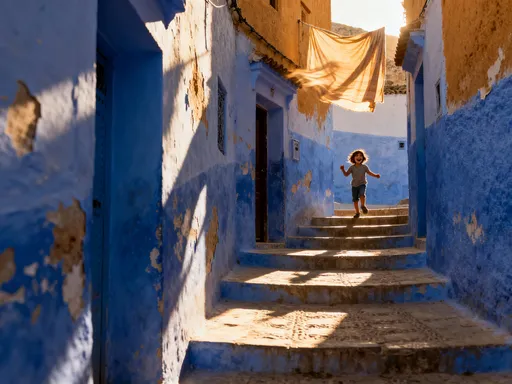
Walking through Chefchaouen, Morocco, feels like stepping into a living watercolor. Every alley, square, and staircase is washed in blue—from soft sky tones to deep ocean hues. It’s not just beautiful; it’s immersive. The city’s public spaces aren’t just for passing through—they’re where life unfolds: children laugh on doorsteps, elders sip mint tea in shaded plazas, and strangers exchange smiles like greetings. This is travel at its most human. In a world where urban environments often prioritize speed and efficiency over connection, Chefchaouen stands apart as a place where color, community, and culture merge into one harmonious experience. Here, the streets are not merely pathways but shared living rooms, where every shade of blue tells a story and every corner invites pause and presence.
The Blue That Changed Everything
Chefchaouen’s most striking feature is impossible to miss—the entire medina appears submerged in blue. From rooftops to cobblestones, the city glows with varying shades of azure, cobalt, and cerulean. This visual phenomenon is more than an aesthetic choice; it shapes the very atmosphere of the town. The reflective quality of the paint cools the air slightly under the North African sun, while the color itself alters perception—softening light, calming emotions, and guiding movement through winding lanes. Unlike other picturesque Mediterranean towns that rely on whitewashed walls or terracotta roofs, Chefchaouen commits fully to blue, creating a sensory environment that feels both surreal and deeply peaceful.
The origins of this tradition are layered, much like the paint itself. One widely accepted explanation traces back to Jewish refugees who settled in the city in the 15th century. For them, blue held spiritual significance—representing the divine presence and serving as a reminder of the sky and God’s watchfulness. The use of indigo or chalk-based pigments may have also been practical, helping to repel mosquitoes and keep homes cooler. Over time, the practice was adopted more broadly by the local population, becoming a point of civic pride and identity. While historical records do not offer definitive proof of a single origin, the enduring legacy is clear: blue has become inseparable from Chefchaouen’s soul.
What makes the color so transformative is its consistency and depth. It is not confined to doors or window frames but extends to entire façades, stair risers, and even the undersides of archways. This saturation creates a rhythm as visitors move through the city—each turn revealing a new variation in tone, each shadow deepening the hue. The effect is meditative. Travelers often report feeling a sense of quiet joy, as if walking through a dream rendered in pigment. This emotional resonance is no accident; color psychology suggests that blues promote relaxation, clarity, and introspection—qualities that align perfectly with the city’s unhurried pace and welcoming spirit.
Plazas as the Heartbeat of Daily Life
At the center of Chefchaouen’s social fabric lies Outa Hammam Square, a modest but vibrant open space adjacent to the Grand Mosque. More than just a crossroads, this plaza functions as the city’s communal living room. Benches line the edges, fountains trickle softly in the center, and shaded arcades provide refuge from the midday sun. From dawn until dusk, the square pulses with activity. Vendors arrive early with baskets of fresh bread and bunches of wild thyme. Families gather after prayers, children chase one another between pillars, and older residents settle into conversation over steaming glasses of mint tea.
The design of the plaza encourages lingering rather than transit. Unlike modern urban plazas designed for spectacle or commerce, Outa Hammam exists for participation. There are no ticketed events or staged performances—just the organic rhythm of daily life. Café terraces spill onto the edges of the square, their low tables and cushioned seats inviting slow sipping and longer stays. The absence of loud music or aggressive touting allows natural sounds to dominate: the clink of teacups, the murmur of conversation, the occasional call to prayer echoing from the mosque’s minaret.
What stands out most is the sense of shared ownership. No single group monopolizes the space. Locals and visitors coexist easily, not because of formal rules but because of unspoken norms of respect and inclusion. A grandmother might nod approvingly at a tourist photographing the fountain, while a shopkeeper offers directions with a smile. These small gestures reinforce the idea that public space belongs to everyone. The square does not merely host life—it nurtures it, providing a stage where community bonds are quietly strengthened with each passing hour.
Streets as Shared Living Rooms
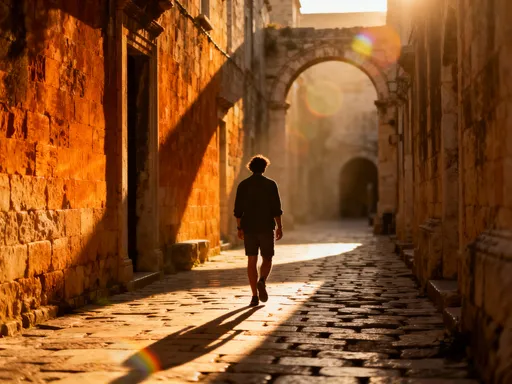
In Chefchaouen, the distinction between private and public space blurs in the most beautiful way. Narrow alleyways, often no wider than a few feet, serve not just as passageways but as extensions of homes. Doorsteps become seating areas, stair landings double as craft stations, and shaded corners host impromptu conversations. There are no fences or gates to mark boundaries; instead, homes open gently into the street, their blue-washed walls framing scenes of everyday intimacy. A woman might be seen kneading dough just inside her doorway, visible but not exposed, while her children play a few steps away on the cobblestones.
This fluidity fosters a culture of visibility and trust. Residents know their neighbors not by name alone but by routine—by the time they take out the laundry, the way they stir their tea, the songs they hum while sweeping. Strangers are not ignored but acknowledged with a nod or a quiet greeting. The architecture supports this openness: buildings are constructed close together, creating natural shade and reducing wind, while the coolness of the stone walls offers relief during warm afternoons. These physical qualities make the streets inherently comfortable, encouraging people to spend time outside rather than retreating indoors.
Sensory details enrich the experience. The scent of cumin and fresh bread drifts from open windows. The rhythmic clatter of a weaving shuttle comes from an upper-floor workshop. The touch of the cool, slightly textured paint under fingertips grounds the visitor in the moment. Even sound behaves differently here—the narrow passages muffle traffic noise, amplifying softer sounds like laughter or the rustle of fabric. In this way, the city engages all the senses, transforming a simple walk into a full-bodied encounter with place and people.
Markets That Connect, Not Just Sell
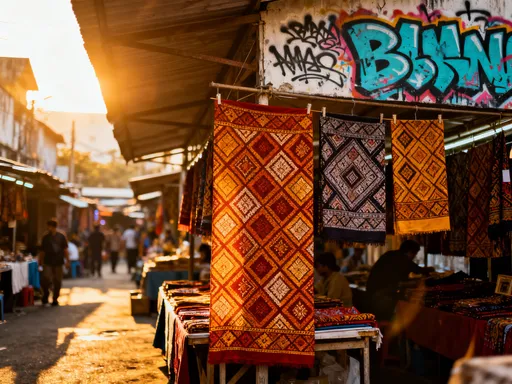
Commerce in Chefchaouen is not a transactional exercise but a social ritual. The weekly souk, held on Thursdays and Sundays, turns several streets into bustling market corridors where locals from surrounding villages bring their harvests and handmade goods. Unlike tourist-centric bazaars elsewhere in Morocco, this market retains its authenticity. You’ll find no mass-produced souvenirs or inflated prices here. Instead, vendors sell goat cheese wrapped in leaves, hand-spun wool blankets, jars of raw honey, and bottles of argan oil—products rooted in the land and tradition of the Rif region.
Bargaining, when it occurs, is gentle and conversational. A customer might spend ten minutes discussing the weather with a seller before even mentioning price. This relational approach to trade builds familiarity and trust. A regular buyer might be offered a taste of fresh cheese or a small gift of herbs. For visitors who take the time to engage respectfully, these interactions can become some of the most memorable moments of their trip. The market is not performative; it is real life unfolding in public view.
Smaller stalls operate daily in the medina, often tucked into alcoves or set up on folding tables. These micro-markets sell essentials—spices, olives, bread—but also serve as informal meeting points. A woman buying turmeric might pause to chat with a neighbor about her granddaughter’s school progress. A man selecting figs might exchange news about rainfall and crop yields. These exchanges, brief as they may be, reinforce the idea that markets are not just economic spaces but social ones. They are where information flows as freely as goods, and where community ties are maintained through routine and reciprocity.
Green Spaces and the Breath of the City
While Chefchaouen’s blue streets dominate the imagination, the city’s connection to nature extends beyond its walls. Nestled at the foot of the Rif Mountains, it benefits from proximity to Parc Naturel de Talassemtane, a protected area known for its cedar forests, wildflowers, and hiking trails. Many residents make weekend trips into the park for walks, picnics, or quiet reflection among the trees. These excursions are not seen as escapes from the city but as extensions of daily life—a way to recharge while staying rooted in place.
Within the city itself, small urban gardens and green courtyards offer quieter retreats. Some are attached to homes, visible through open gates; others are communal spaces maintained by neighborhood groups. These pockets of greenery provide visual relief from the blue palette and introduce seasonal variation—jasmine in spring, pomegranate blossoms in summer. They also support biodiversity, attracting birds, bees, and butterflies to an otherwise densely built environment.
What makes these spaces meaningful is how they are used. Parents bring toddlers to sit on grassy patches. Elders rest on simple benches beneath fig trees. Teenagers gather in the late afternoon, speaking in hushed tones as they study or share secrets. There is no formal programming, no entry fee, no surveillance—just the freedom to be present in nature without performance. These green zones act as the city’s lungs, offering both physical respiration and emotional relief. They remind residents and visitors alike that urban life need not be disconnected from the natural world.
Design Lessons from an Ancient Urban Canvas
Chefchaouen offers subtle but powerful lessons in urban design. Its layout is not the product of modern planning committees but of centuries of adaptation to terrain, climate, and culture. The medina climbs the hillside in organic tiers, connected by stepped pathways that slow movement and encourage mindfulness. Unlike grid-based cities designed for speed, Chefchaouen rewards slowness. Each turn reveals a new vista, each ascent offers a different perspective. This intentional irregularity prevents monotony and fosters discovery.
The city’s elevation—over 500 meters above sea level—provides natural ventilation, while the narrow, shaded alleys reduce solar exposure. The blue paint, as previously noted, contributes to thermal comfort. Together, these elements create a microclimate that feels temperate even in summer. Modern urban planners grappling with heat islands and air pollution could learn from this low-tech, high-impact approach to environmental resilience.
Equally important is the psychological impact of the design. The absence of cars, the prevalence of pedestrian pathways, and the integration of seating into walls and steps all signal that people come first. There are no designated “Instagram spots” or commercial zones that exclude locals—just spaces that evolve naturally from use. This organic authenticity contrasts sharply with many contemporary cities where public areas are designed for consumption rather than connection. Chefchaouen demonstrates that well-being in urban environments is not about grand scale or high budgets but about thoughtful details that honor human rhythm and dignity.
How to Truly Experience Public Life in Chefchaouen
To experience Chefchaouen deeply, one must shift from sightseeing to being. The best times to walk the streets are early morning, when the city wakes slowly, and late afternoon, when golden light enhances the blue tones and families begin to gather. Avoid midday, when the sun beats down and activity retreats indoors. Bring a light scarf for shade and a reusable water bottle—small gestures of respect for the environment and your own comfort.
Photography should be approached with care. While the city is undeniably photogenic, pointing a lens at people without permission can disrupt the very authenticity you’ve come to witness. If you wish to photograph a vendor, a child, or an elder, ask first with a smile and a simple phrase like “Is it okay?” in English or a polite nod. Many will say yes, especially if you take a moment to talk. Some may decline—and that is to be honored. The goal is not to capture the perfect image but to participate in the moment.
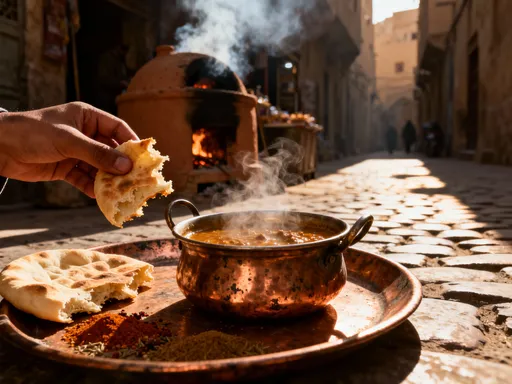
Learning a few basic phrases in Arabic or Tamazight (the Berber language) goes a long way. “Salam alaikum” (peace be upon you), “Shukran” (thank you), and “Labas?” (how are you?) open doors more effectively than any guidebook. When offered tea, accept if possible—it is a gesture of hospitality. Sit at a café not to rush through a meal but to observe, listen, and let time expand. Order a simple dish like zaalouk (eggplant dip) with fresh bread and sip mint tea slowly. Let the surroundings wash over you.
Most importantly, resist the urge to check items off a list. Chefchaouen is not a museum but a living community. There is no “must-see” monument or hidden gem that defines the experience. Instead, the magic lies in the ordinary: a shared silence on a bench, the sound of a distant flute, the way light hits a blue wall at dusk. To truly see the city, you must be willing to see less—to slow down, to notice, and to allow yourself to be seen in return.
The Human Side of Urban Beauty
Chefchaouen is more than a destination; it is a philosophy made visible. Its blue walls are not a gimmick or a trend but a reflection of values—harmony, care, and continuity. The city teaches us that public spaces are not just functional zones but emotional anchors. They are where identity is expressed, relationships are nurtured, and culture is lived rather than displayed. In an age of increasing isolation and digital saturation, Chefchaouen offers a quiet rebuttal: that connection is possible, that beauty can be communal, and that urban life can be humane.
Travelers who visit often carry a piece of this feeling home—not as a souvenir, but as a shift in perspective. They begin to notice how their own cities treat public space. Are benches placed for comfort or deterrence? Are markets designed for interaction or efficiency? Is there room for stillness, for conversation, for simply being? Chefchaouen does not offer solutions, but it does offer inspiration. It reminds us that the soul of a city is not in its skyline or statistics but in its sidewalks, squares, and shared moments.
As you leave the blue medina, the color lingers in your mind like a melody. You realize it was never just about the paint. It was about the people who live within it, who maintain it, who greet you not as customers but as guests. In their quiet dignity and open warmth, Chefchaouen reveals a truth that transcends borders: that the most beautiful places are not those we look at, but those we belong to, even if only for a little while.