You Won’t Believe How Boston’s Architecture Tells Its Story
Walking through Boston feels like flipping through the pages of an architectural novel. From colonial charm to sleek modern towers, every neighborhood reveals a different chapter. I was stunned by how much history lives in the brickwork and rooftops. This city doesn’t just preserve its past — it builds on it. If you’re into real, authentic urban beauty, Boston’s architectural journey is one you need to experience firsthand.
The Historical Heart: Colonial and Federal Architecture in Boston
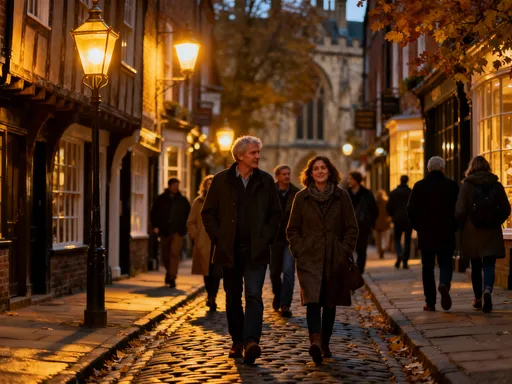
Boston’s architectural soul begins in its oldest neighborhoods, where centuries-old brick homes stand as enduring testaments to early American life. Beacon Hill, with its red-brick row houses, narrow cobblestone streets, and gaslit lamps, offers one of the most intact examples of 19th-century urban design in the United States. Walking through this district is like stepping into a living museum. The Federal-style homes, characterized by symmetrical facades, fanlight doorways, and modest decorative details, reflect the values of order, restraint, and civic responsibility that shaped New England’s identity. These homes were not built for extravagance but for practicality and dignity—qualities deeply rooted in the region’s cultural fabric.
Preservation efforts have played a crucial role in maintaining the integrity of these historic districts. The Beacon Hill Architectural Commission, established in the mid-20th century, enforces strict guidelines on renovations, ensuring that changes to windows, roofing materials, and exterior paint colors remain historically accurate. As a result, residents and visitors alike experience a remarkable continuity of design. The North End, Boston’s oldest residential community, shares a similar architectural legacy. Its tightly packed streets echo the colonial-era layout, with multi-story brick dwellings and shared party walls that maximized limited space on the original peninsula.
For those eager to explore, the Freedom Trail offers an ideal walking route, linking 16 historically significant sites from the Massachusetts State House to the Paul Revere House. Along this 2.5-mile path, architecture becomes a storytelling device—each building marking a pivotal moment in the nation’s founding. The Old State House, with its Georgian symmetry and central cupola, served as the seat of colonial government and later witnessed the drafting of the Declaration of Independence. Its red brick and white trim stand in quiet contrast to the glass towers rising nearby, symbolizing the dialogue between past and present that defines Boston.
Gothic Revival & Academic Grandeur: Universities and Churches
As Boston expanded in the 19th and early 20th centuries, its institutions of learning and faith embraced architectural styles that conveyed permanence, wisdom, and spiritual reverence. The Gothic Revival movement, inspired by medieval European cathedrals, became a favored choice for universities and churches seeking to project intellectual and moral authority. On the campuses of Harvard University in Cambridge and Boston College in Chestnut Hill, one sees soaring stone arches, pointed towers, and intricately carved stonework that evoke centuries of scholarly tradition. These buildings were designed not only to house classrooms but to inspire awe and reflection in students and visitors alike.
Perhaps the most iconic example of this style in Boston is Trinity Church, located in Copley Square. Designed by Henry Hobson Richardson and completed in 1877, the church is widely regarded as a masterpiece of Richardsonian Romanesque architecture—a unique American interpretation of Gothic and Romanesque elements. Its rugged granite exterior, massive central tower, and deeply recessed arched entrances give the structure a grounded, almost fortress-like presence. Inside, the space is transformed by vibrant murals, stained glass by John La Farge, and a sense of intimate grandeur that defies its relatively modest size. The church’s design was revolutionary at the time, influencing public and religious buildings across the country.
Educational institutions adopted similar aesthetics to align themselves with time-honored traditions of learning. At MIT, despite its reputation for cutting-edge innovation, portions of the campus—particularly the older buildings along Massachusetts Avenue—feature Collegiate Gothic detailing. This intentional blending of old and new reflects a broader theme in Boston’s architectural identity: progress does not require erasing the past. Even in modern academic expansions, designers often incorporate stone cladding, arched walkways, or courtyard layouts to maintain visual harmony with historic neighbors.
Victorian Elegance: The Rise of Ornament in 19th-Century Boston
The Victorian era brought a dramatic shift in Boston’s architectural language—one defined by ornamentation, variety, and expressive individuality. As the city grew wealthier through trade, manufacturing, and transportation, a new class of professionals and merchants sought homes that reflected their status. Back Bay, once a tidal marsh, was transformed through one of the largest land reclamation projects in American history. By the 1860s, engineers had begun filling in the mudflats, creating over 500 acres of buildable land. This newly formed neighborhood became a canvas for Victorian-era design, resulting in one of the most cohesive collections of 19th-century urban architecture in the nation.
The brownstone homes of Back Bay are instantly recognizable: three- or four-story structures with ornate stone carvings, projecting bay windows, steeply pitched roofs, and decorative iron railings. Each home, though built on a standardized grid, was given unique flourishes—carved floral motifs above doorways, stained glass transoms, and intricately patterned brickwork. These details were not mere decoration; they were statements of identity and prosperity. The use of cast-iron railings, often imported from foundries in New York or Pennsylvania, added both elegance and structural support to front porches and rooftop terraces.
Architects like Charles Amos Cummings and Willard T. Sears helped define the neighborhood’s aesthetic, blending elements of the Italianate, Second Empire, and Queen Anne styles. The result was a streetscape that felt both orderly and richly varied. Today, Back Bay remains one of Boston’s most desirable residential areas, not only for its location but for the enduring appeal of its architecture. Preservation laws protect the exterior appearance of these homes, ensuring that renovations respect the original design intent. Walking down Commonwealth Avenue, with its central mall lined with linden trees and gaslit lampposts, one experiences a rare harmony of urban planning, nature, and architectural beauty.
From Skyscrapers to Brutalism: Boston’s 20th-Century Transformation
The 20th century introduced a new architectural vocabulary to Boston—one shaped by industrialization, urban renewal, and evolving ideas about function and form. The skyline began to change dramatically with the rise of steel-frame construction and glass curtain walls. The Financial District, centered around State Street and Congress Street, became home to some of the city’s first high-rise office buildings. The Custom House Tower, completed in 1915, was one of the earliest skyscrapers and remains a landmark with its neoclassical dome and maritime-themed reliefs. Later additions, such as the 60-story Hancock Tower (now 200 Clarendon Street), introduced a sleek, minimalist aesthetic with its reflective glass façade and slender profile.
However, no 20th-century style sparked more debate than Brutalism. Characterized by raw concrete, geometric massing, and an emphasis on structural honesty, Brutalist architecture emerged in the 1960s and 1970s as a response to the need for affordable, functional public buildings. Boston City Hall, completed in 1968, is perhaps the most polarizing example. Its cantilevered concrete forms, deep recesses, and fortress-like appearance were intended to convey civic strength and democratic transparency. Yet, public reception has been mixed—many find it imposing or unwelcoming, while others praise its boldness and originality.
Despite the controversy, Brutalism left a lasting imprint on Boston’s architectural landscape. Other notable examples include the John W. McCormack Post Office and Courthouse and the brutalist wing of the Massachusetts Institute of Technology’s student center. In recent years, there has been a growing appreciation for these structures, with preservationists advocating for their protection. Adaptive reuse projects, such as the conversion of the brutalist Boston Government Service Center’s annex into residential units, demonstrate how these buildings can be reimagined for contemporary needs without losing their architectural character.
The Green Line: How Urban Planning Shapes Architectural Flow
Boston’s architectural diversity is not just a product of changing styles over time—it is also deeply influenced by the city’s unique geography and transportation network. Originally a narrow peninsula, Boston has expanded significantly through landfill, absorbing surrounding marshes and tidal flats. This organic growth resulted in a street pattern that is famously irregular, especially in older neighborhoods like the North End and Beacon Hill, where streets follow colonial-era footpaths rather than a rigid grid. In contrast, areas like Back Bay and the South End were developed later with more structured layouts, featuring wide avenues and uniform block sizes.
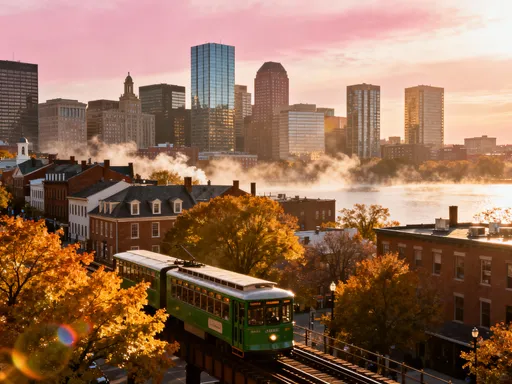
The city’s public transit system, particularly the Green Line—the oldest subway in the United States—plays a vital role in connecting these diverse architectural zones. Running from Boston Common through the Back Bay, Brookline, and beyond, the Green Line allows residents and visitors to experience centuries of design evolution within a single journey. Boarding a trolley at Park Street, one passes from the neoclassical grandeur of the State House to the Victorian elegance of Symphony Hall, then into the modern glass towers of the Prudential Center. This seamless transition underscores how Boston’s architecture is not isolated but part of a continuous urban narrative.
Urban planning initiatives continue to shape the city’s built environment. In neighborhoods like the Seaport District, mixed-use development combines residential towers, office spaces, and retail areas with public plazas and green spaces. These projects aim to balance density with walkability, ensuring that new construction complements rather than overwhelms its surroundings. The success of such developments lies in their ability to integrate contemporary design with contextual sensitivity—using materials, scale, and massing that respond to Boston’s architectural heritage.
Hidden Gems: Off-the-Beaten-Path Architectural Treasures
Beyond the well-trodden paths of the Freedom Trail and Back Bay lie lesser-known architectural treasures that reveal deeper layers of Boston’s history. The Vilna Shul, a former synagogue on Beacon Hill built in 1919, stands as the last immigrant-era Jewish congregation house in downtown Boston. Though no longer an active house of worship, it has been preserved as a cultural center, showcasing original mural paintings and a sanctuary space that reflects the Eastern European traditions of its founders. Its modest brick façade belies the richness of its interior, where art and memory converge.
Another remarkable example of adaptive reuse is the Charles Street Jail, designed by architect Gridley J.F. Bryant and completed in 1851. With its radial layout and granite walls, the building was once a model of progressive incarceration. After decades of disuse, it was transformed into the Liberty Hotel in 2007—a luxury establishment that retains much of the original structure, including the central atrium and iron-barred windows, now safely behind glass. The renovation was celebrated for its creativity and respect for history, turning a symbol of confinement into one of hospitality and renewal.
Along Huntington Avenue, the Art Deco facades of buildings like the former Boston Opera House (now the Citizens Bank Opera House) showcase another underappreciated aspect of the city’s design legacy. With their geometric patterns, stylized reliefs, and vertical emphasis, these structures reflect the optimism and modernity of the early 20th century. Though overshadowed by more famous landmarks, they contribute to the architectural richness of the Fenway and Longwood Medical Area, where historic and contemporary buildings coexist in dynamic harmony.
Boston’s Future: Sustainability and Smart Design
As Boston looks to the future, its architectural vision is increasingly shaped by the imperatives of sustainability, resilience, and inclusivity. The Seaport District, once a neglected industrial waterfront, has emerged as a model of 21st-century urban development. New buildings here incorporate energy-efficient glazing, green roofs, solar panels, and stormwater management systems designed to withstand rising sea levels. The Boston Green Ribbon Commission, a coalition of business and civic leaders, has been instrumental in promoting climate-ready design, urging developers to meet high environmental standards.
Innovative projects like the Mass Central Rail Trail and the ongoing revitalization of the Rose Fitzgerald Kennedy Greenway demonstrate how public space can be reimagined to serve both ecological and social functions. The Greenway, built atop the former I-93 highway tunnel, features native plantings, interactive fountains, and flexible event spaces that activate the urban core. Similarly, the proposed expansion of the Emerald Necklace—a historic park system designed by Frederick Law Olmsted—aims to connect more neighborhoods with green corridors, improving air quality and access to nature.
At the same time, the city remains committed to preserving its historic fabric. The Boston Landmarks Commission continues to designate new sites for protection, while incentive programs encourage energy-efficient retrofits of older buildings. This dual focus—honoring the past while embracing innovation—ensures that Boston’s architectural evolution remains thoughtful and inclusive. Future developments are expected to prioritize pedestrian access, affordable housing, and community engagement, reflecting a broader understanding of what makes a city truly livable.
Boston’s architecture isn’t just about old vs. new — it’s a continuous conversation across centuries. Each building, whether a quiet brick home or a bold concrete statement, contributes to a city that honors its roots while moving forward. Walking its streets, you don’t just see history — you feel it. And that makes Boston one of America’s most architecturally alive cities.