Lost in the Stone Streets of Split – Where History Walks With You
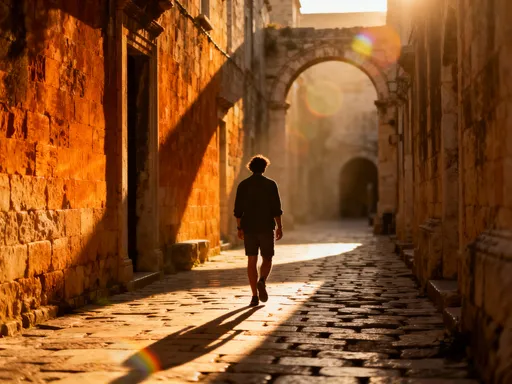
Ever wandered through a city that feels alive with stories? Split, Croatia isn’t just a destination — it’s a conversation with the past. As I wandered its sun-drenched alleys, I wasn’t just seeing landmark buildings — I was feeling them. From Diocletian’s Palace to hidden bell towers, every stone has a voice. This is travel that doesn’t shout, but whispers secrets you never knew you needed to hear. In Split, history isn’t preserved behind glass; it’s lived in, walked through, and breathed every day. It’s a place where ancient columns support modern balconies, where Roman gridlines still guide your steps, and where the sea breeze carries echoes of emperors and fishermen alike. This is not a museum city — it’s a living, breathing urban tapestry woven from 1,700 years of continuous life.
The Heartbeat of the City: Diocletian’s Palace as a Living Quarter
At the core of Split lies Diocletian’s Palace, not as a relic frozen in time, but as the vibrant, pulsing heart of daily life. Built between 295 and 305 AD by the Roman Emperor Diocletian as his retirement residence, the palace was never truly abandoned. Unlike many ancient sites that stand in isolation, this one evolved — organically, continuously — into the city itself. Today, more than 3,000 people live within its original walls, turning what was once an imperial sanctuary into a dynamic urban neighborhood. The palace is not something you merely observe from a distance; it’s something you walk through, shop in, and even live above.
The Peristyle, the grand central courtyard, remains the spiritual and architectural nucleus of the complex. Encircled by towering Corinthian columns and crowned with a dome that filters sunlight like a celestial sieve, this open space once hosted imperial ceremonies. Now, it welcomes tourists, locals, and street musicians who fill the air with melodies that blend seamlessly with the murmur of footsteps on ancient stone. The Temple of Jupiter, originally dedicated to the king of Roman gods, stands nearby — a remarkably preserved rotunda that later became a baptistery and now functions as both a historical site and a venue for classical concerts. Its massive bronze doors, carved with intricate reliefs, are among the oldest surviving Roman metal doors in the world.
Beneath the surface, the palace reveals another dimension — its vast underground cellars. These dimly lit chambers, supported by towering granite columns, once stored wine, oil, and grain for the emperor’s household. Today, they host art exhibitions, wine tastings, and cultural performances, their cool, echoing halls offering respite from the summer heat. What makes Diocletian’s Palace extraordinary is not just its age or architectural grandeur, but its continuity. It has never ceased to be useful. A 4th-century wall supports a 21st-century café; a Roman gateway frames a boutique selling handmade lavender soap. This seamless integration of past and present is rare in the modern world, and in Split, it feels not like preservation, but like natural evolution.
Climbing Bell Towers: A View From Above the Maze
To truly understand Split, one must rise above it. The city’s labyrinthine streets, while enchanting at ground level, can disorient even the most seasoned traveler. But from the heights of its bell towers, clarity emerges. Two towers in particular offer unparalleled vantage points: the bell tower of the Cathedral of Saint Domnius and the lesser-known spire of the Church of Saint Francis. Both require a climb — sometimes narrow, always steep — but the reward is more than a photograph. It is perspective.
The Cathedral of Saint Domnius, originally Diocletian’s mausoleum, boasts a 57-meter bell tower that has dominated Split’s skyline for centuries. The climb involves ascending over 200 steps, winding through dimly lit passages where centuries of masons, bell-ringers, and pilgrims have left their mark. The stone underfoot is worn smooth by time, each step a testament to the thousands who have come before. As you ascend, the sounds of the city grow muffled, replaced by the occasional flutter of pigeons nesting in hidden crevices. Then, suddenly, you emerge — and the entire city unfolds beneath you.
To the west, the Adriatic Sea stretches toward the horizon, its waters shifting from deep blue to turquoise near the shore. To the east, the red-tiled roofs of Split cascade down the hillside like a mosaic frozen in motion. The grid of Diocletian’s original plan becomes visible — the cardo and decumanus, the main north-south and east-west axes, still guiding the flow of pedestrian traffic. From this height, you see how the rigid Roman order has been softened by centuries of organic growth, with alleyways branching like vines and courtyards appearing like hidden lungs in the urban fabric.
The bell tower of the Church of Saint Francis, though shorter, offers a more intimate experience. Located near the Riva, it provides a closer view of the harbor and the comings and goings of ferries and fishing boats. From here, you can watch the daily rhythm of the city — the morning arrival of islanders bringing fresh produce, the midday bustle of tourists, and the slow evening transition as lanterns flicker on and outdoor tables fill with diners. These towers are not just observation points; they are places of reflection, where the chaos of the streets resolves into a coherent, beautiful whole.
The Riva: Where Sea Meets Stone and Life Flows
If Diocletian’s Palace is the heart of Split, the Riva is its pulse. This elegant waterfront promenade, lined with limestone pavement and shaded by stone columns, runs along the eastern edge of the old city, where the land meets the sea. More than just a scenic walkway, the Riva is the city’s social spine — a place where locals gather, tourists linger, and life unfolds in real time. At dawn, it belongs to joggers and fishermen casting lines into calm waters. By midday, it fills with visitors strolling between cafes and souvenir stands. In the evening, it transforms into a stage for impromptu performances, romantic walks, and the gentle clinking of wine glasses.
The Riva’s design reflects centuries of maritime influence, particularly from the Venetian period when Split was part of the Republic of Venice. The arcades that line its inland side echo the architecture of Venetian piazzas, providing shade and shelter while creating a rhythm of light and shadow. These arcades house everything from gelato shops to art galleries, their doors opening directly onto the promenade. Along the way, you pass significant landmarks: the Papalić Palace, one of the oldest Renaissance buildings in Dalmatia, now home to the City Museum; and the Ethnographic Museum, which preserves the cultural heritage of the region through traditional costumes, tools, and household items.
But the Riva is not just about architecture — it’s about connection. It links the old city to the modern port, where ferries depart daily for nearby islands like Brač, Hvar, and Šolta. Watching a ferry arrive, its deck crowded with cyclists and sunburned travelers, is to witness Split’s role as a crossroads — a place where mainland and island life intersect. The promenade also hosts seasonal events, from open-air concerts to Christmas markets, reinforcing its role as a communal space. Whether you’re sipping coffee at a sidewalk table or simply watching the waves lap against the seawall, the Riva offers a sense of belonging, a feeling that you are part of something alive and enduring.
Beyond the Palace: Hidden Gems in Plain Sight
While Diocletian’s Palace draws the majority of attention, Split’s true charm often lies just beyond the main thoroughfares, in quiet corners known more to locals than to guidebooks. One such place is the Prokurative, a graceful square modeled after St. Mark’s Square in Venice. Built in the early 19th century during the Napoleonic era, this semi-circular plaza is surrounded by cream-colored arcades and shaded by plane trees. In the evenings, it becomes a hub of social life, with musicians playing jazz and families gathering for ice cream. Though sometimes called “Split’s little Venice Square,” it is distinctly Dalmatian in spirit — refined yet relaxed, elegant without pretension.
Nearby, the Romanesque Church of Saint Peter stands as a quiet testament to medieval craftsmanship. Its simple façade belies a richly carved portal, where biblical scenes are rendered in intricate stone. Though small, the church holds a deep sense of serenity, especially in the late afternoon when sunlight filters through its stained-glass window. Just steps away are the Gold and Silver Doors of Diocletian’s Palace — two of the most artistically significant entrances in the complex. The Golden Door, once reserved for the emperor’s use, features elaborate carvings of mythological figures and Christian symbols, reflecting the transition from pagan to Christian rule. The Silver Door, on the southern wall, is equally ornate, with reliefs depicting Roman military standards and celestial motifs.
These sites are rarely the focus of organized tours, yet they offer some of the most authentic experiences in Split. They are places where time slows, where you can stand in silence and feel the weight of centuries. They remind us that discovery is not always about grand monuments, but about noticing details — a weathered inscription, a fragment of mosaic, a shaft of light falling across an ancient threshold. Wandering without a map, guided only by curiosity, often leads to the most meaningful encounters.
Walking the Grid: How Roman Urban Design Shapes the Wander
Split’s layout is no accident. It follows the precise, rational design of a Roman *castrum* — a military camp built for order, defense, and efficiency. Diocletian’s Palace was originally a fortified compound with two main streets: the cardo, running north-south, and the decumanus, running east-west. These axes still define the city’s core, guiding foot traffic more than 1,700 years later. The cardo leads from the Silver Gate to the Peristyle, while the decumanus connects the Iron Gate to the Golden Gate. Even as the city expanded beyond the palace walls, these original lines remained dominant, shaping the flow of movement and commerce.
This Roman grid does more than organize space — it enhances the experience of walking. The narrow, shaded streets provide natural cooling, a critical feature in Dalmatia’s hot summers. Courtyards, originally part of the palace’s private quarters, now serve as quiet oases where residents hang laundry or sit with a cup of coffee. The alignment of gates and streets also channels the *maestral*, the cooling sea breeze that sweeps in from the west during the day, naturally ventilating the city. This is urban planning with purpose — not just aesthetic, but deeply functional.
For the modern visitor, understanding this layout transforms confusion into clarity. What may initially seem like a maze of indistinguishable alleys reveals a logical structure upon closer inspection. Each gate — Bronze, Iron, Silver, Golden — served a specific purpose, from military access to ceremonial entrances. The symmetry of the original plan is still visible, even as later additions have softened its edges. Walking through Split with this knowledge is like reading a map written in stone — every turn has meaning, every junction a history. It is a city designed to be walked, not driven, and the act of wandering becomes a form of discovery.
Materials That Breathe: Limestone, Tile, and the Architecture of Climate
Split’s architecture is not only beautiful — it is intelligent. The city’s buildings are constructed primarily from local limestone, quarried from the nearby islands and mainland cliffs. This stone is more than just decorative; it is a thermal regulator. During the day, it absorbs heat slowly, preventing interiors from overheating. At night, it releases that heat gradually, maintaining a stable indoor temperature. The thick walls of old houses, often more than half a meter wide, act as natural insulators, keeping rooms cool in summer and warm in winter.
The roofs, covered in red clay tiles, are equally functional. Their curved shape allows rainwater to run off quickly, preventing leaks and erosion. The color itself plays a role — dark red absorbs less heat than black tiles, reducing the transfer of warmth into living spaces. These tiles are often laid in overlapping patterns that create small air pockets, further enhancing insulation. In traditional homes, wooden beams support the roof structure, while stone floors provide additional cooling underfoot.
Even the placement of windows and doors follows climatic logic. Windows on the south and west sides are typically smaller to minimize direct sunlight, while those facing north and east are larger to allow for ventilation. Many homes feature internal courtyards, which create microclimates by trapping cool air and providing shaded outdoor space. These design choices are not modern innovations — they are the result of centuries of adaptation, passed down through generations of builders who understood the land and its rhythms.
Today, restoration projects in Split prioritize these traditional materials and techniques, recognizing that sustainability is not a new concept. Heritage conservation here is not about freezing buildings in time, but about maintaining their functionality. A restored palace is not just a museum — it is a home, a workspace, a café. The intelligence of Dalmatian architecture lies in its harmony with nature, proving that beauty and practicality can coexist.
Wandering as a Way of Seeing: Why Slow Travel Unlocks True Connection
In an age of itineraries and photo checklists, Split offers a different kind of travel — one that values presence over productivity. To wander here is not to get lost, but to find something deeper. The city resists hurried exploration. Its secrets are not found in guidebook highlights, but in the quiet moments between destinations: a cat sleeping on a sun-warmed step, a grandmother hanging laundry in a hidden courtyard, the sound of a lute drifting from an open window.
Slow travel in Split means allowing yourself to be guided by curiosity rather than schedules. It means pausing to trace the grooves in a carved capital, wondering who last touched it centuries ago. It means sitting in a shaded arcade with a glass of maraschino liqueur and simply watching life unfold. This kind of travel fosters connection — not just to the city, but to oneself. In the stillness of an ancient courtyard, surrounded by walls that have stood for generations, one gains perspective. The rush of daily life fades, replaced by a sense of continuity, of being part of a much longer story.
Research in environmental psychology suggests that walking through historic environments can reduce stress and enhance well-being. The irregular textures, natural materials, and human-scale design of old cities like Split engage the senses in a way that modern urban landscapes often do not. There is comfort in imperfection — in a cracked step, a crooked doorframe, a patch of ivy growing through stone. These details tell a story of resilience, of life persisting through time. To walk through Split is to participate in that story, not as a spectator, but as a witness and a contributor.
The City That Lives in Its Walls
Split teaches us that landmark buildings are not just monuments to be admired from afar — they are spaces meant to be lived in. As the sun sets over the Adriatic and the first stars appear above the bell towers, the city takes on a different character. Lanterns flicker on in courtyards, casting soft glows on weathered stone. The air cools, carrying the scent of jasmine and grilled fish. The boundary between past and present dissolves, not through reconstruction, but through continuity.
This is a city that does not preserve history — it lives it. Every step through its streets is a dialogue with time. The stones beneath your feet have echoed with the footsteps of emperors, monks, merchants, and mothers. They have absorbed sunlight for nearly two millennia, and they still radiate warmth at dusk. To wander Split is to walk through time, not as a tourist, but as a participant in an ongoing story. There are no loud announcements, no flashing signs — just whispers, carried on the sea breeze, inviting you to listen. Let the stones guide you. They’ve been waiting.